Meet the founder
My research career has been defined by crossing disciplinary boundaries to answer fundamental biological questions. I began in proteomics, mapping Staphylococcus aureus virulence factors (BSc/MRes), before moving into extracellular matrix biology to elucidate collagen degradation by human metalloproteinases (PhD). I then entered cytoskeletal cell biology to investigate the mechanisms of microtubule dynamics, followed by structural neurobiology, where my work helped define the structural basis of prion strain diversity. Most recently, I expanded into chemical biology and advanced imaging, developing approaches to visualise protein misfolding in living cells. I am now extending this trajectory towards entirely new strategies for detecting the earliest molecular events in protein misfolding.
Research philosophy
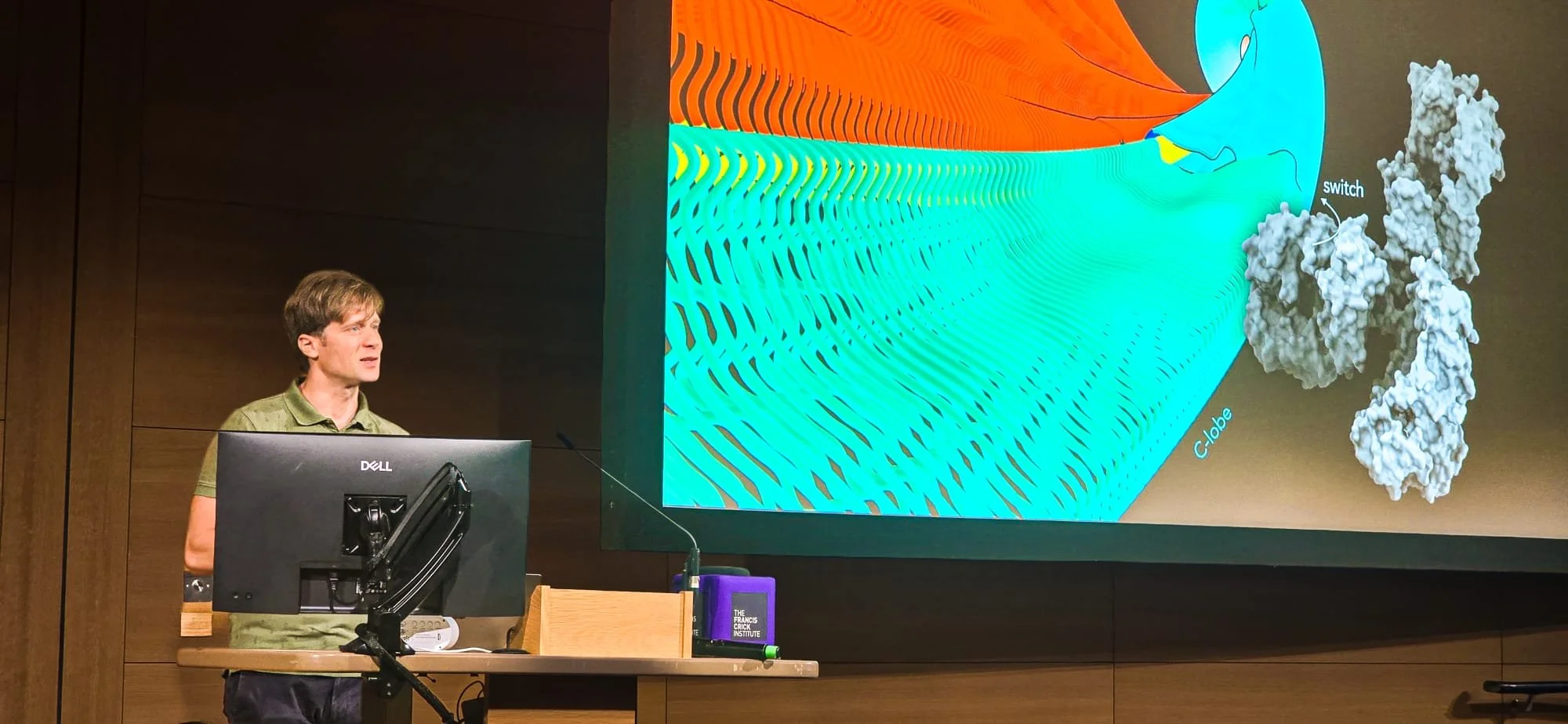
I am especially interested in questions that cannot be solved within a single disciplinary toolkit. My approach is to combine methods and ideas across fields, particularly where new measurements can reveal biological events that were previously inaccessible.
Current direction
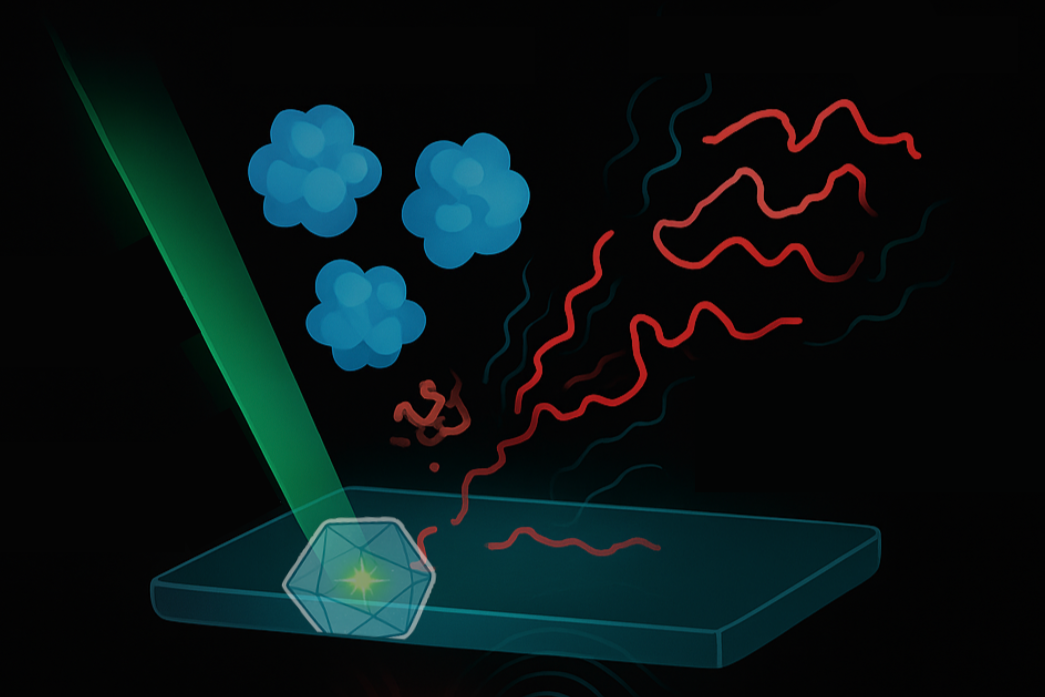
My laboratory studies how proteins misfold and assemble in disease. We use structural and cellular approaches to understand the earliest molecular changes that precede overt pathology. A major aim of our current work is to develop ways to observe and eventually detect these early events in biologically relevant settings using quantum sensing technology.
Szymon W. Manka
At a glance
Interdisciplinary trajectory: microbial proteomics → matrix biology (HDX-MS) → enzymology (X-ray crystallography, ITC) → cytoskeletal dynamics (TIRFM) → structural neurobiology (cryo-EM/ET) → chemical biology and molecular imaging (genetic code expansion) → synthetic and engineering biology (2026 iGEM competition)
Role: Associate Professor, Department of Infectious Disease, Imperial College London
Research focus: Protein misfolding, neurodegeneration, structural biology, molecular imaging, early-stage detection by quantum sensing (new direction)
Funding: MRC Career Development Award; CJD Foundation grants
Protein misfolding | structural biology | neurodegeneration
Understanding protein misfolding
Our research combines structural biology, cell biology, imaging, and emerging sensing approaches to understand how proteins misfold in living systems and how these earliest events might be detected before disease becomes clinically visible.
Research themes
Structural basis of protein misfolding
We investigate how proteins adopt disease-associated conformations and assemble into pathogenic states. Structural approaches, including cryo-EM, allow us to examine the architecture of misfolded protein assemblies and to connect molecular structure with biological behaviour.
Imaging protein misfolding in cells
We develop genetic code expansion and apply bio-orthogonal labeling methods to visualise protein misfolding in living cells. This work aims to bridge the gap between molecular structure and cellular pathology by allowing disease-relevant processes to be observed in more native biological contexts.
Prion strain diversity and neurodegeneration
A major area of focus has been the structural and mechanistic basis of prion strain diversity. Understanding how distinct conformational states encode biological properties is important not only for prion disease, but also for broader questions in protein aggregation and neurodegeneration.
Earliest-stage detection of misfolding events
An emerging direction in the lab is the development of new strategies to detect the earliest molecular signatures of protein misfolding, before conventional biomarkers become visible. This work is motivated by the need for earlier mechanistic insight and, ultimately, earlier opportunities for intervention in neurodegenerative disease.
Contact
Email
smanka@ic.ac.uk